
About Boltz
Boltz PBC is a public benefit AI research company. It builds models that predict the structure of biomolecules and design small molecules and proteins. Scientists use them through Boltz Lab, a platform with built-in AI agents, or through the Boltz API. Boltz-2 and BoltzGen are open source. BoltzMol-1 handles small-molecule hit discovery, and BoltzProt-1 handles protein design. The platform can run multi-tenant, single-tenant or fully on-premise.
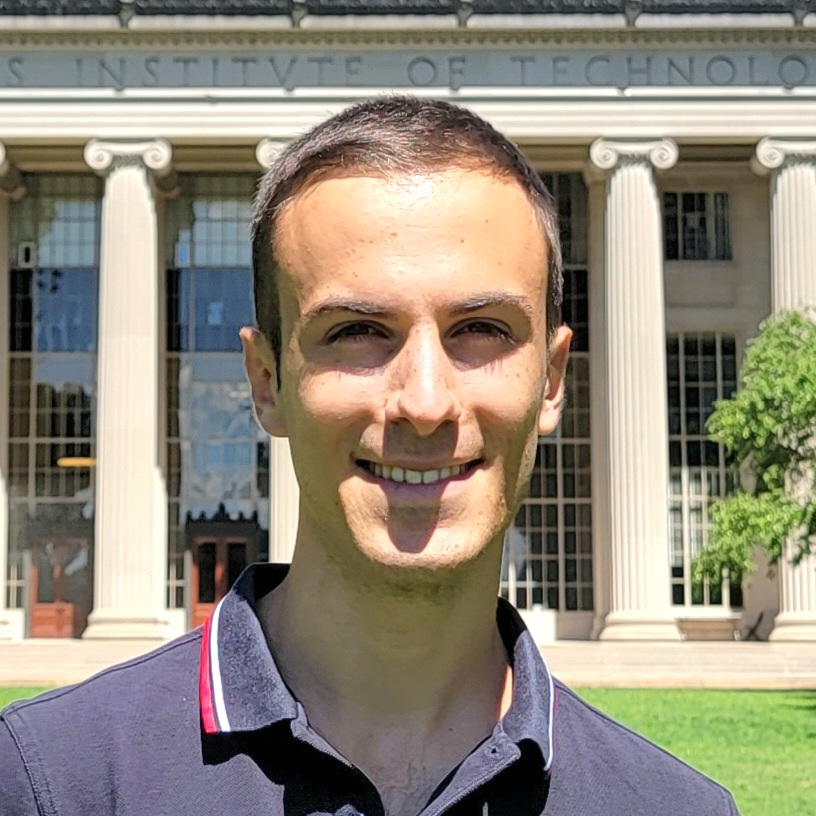
Gabriele Corso is co-founder and chief executive officer. He, Jeremy Wohlwend and Saro Passaro were on the team behind Boltz-1, which MIT's Jameel Clinic released as open source in November 2024. Boltz models have been used by more than 100,000 scientists in academia and industry. Partners include Pfizer, Takeda, GSK, dsm-firmenich and Bristol Myers Squibb. Boltz announced a $28 million seed round in January 2026.
Funding Rounds (SEC Form D)
| First sale | Filed with SEC | Amount sold | Investors | Avg. check | Terms | Filing |
|---|---|---|---|---|---|---|
| Oct 7, 2026 | Oct 22, 2026 | $97,359,830of $119.9M target | 18 | $5.4M | EquityRule 506(b) | Form D ↗ |
First sale is the date the first investor in the offering committed to invest. Companies must file Form D within 15 days of that date, so filing dates run later.
Rounds announced by Boltz
What the company said publicly about its funding. Announced amounts can differ from Form D figures: an announcement can combine several closings, and some money is raised without a Form D.
| Announced | Round | Amount | Investors | Source |
|---|---|---|---|---|
| Jan 8, 2026 | Seed | $28M | Amplify, a16z, Zetta (lead), Clement Delangue (CEO of Hugging Face), Factorial Capital, Obvious Ventures | Announcing Boltz (company post) ↗ GEN: Boltz PBC Launches with $28M ↗ |
Why Investors Backed Boltz
Boltz PBC builds AI models that predict and design small molecules and proteins for drug discovery teams. Scientists reach them through Boltz Lab, a platform, and through the Boltz API. The first Boltz models were open source, and the company now has deals with Pfizer, Takeda, GSK and Bristol Myers Squibb. It announced a $28 million seed round on January 8, 2026.
The problem it targets
Boltz's case is that finding a molecule for a new drug target has meant screening hundreds of thousands of candidates, often at a cost in the millions. The company also argues that powerful AI tools for molecular modeling are becoming closed off. In its view, academia is not equipped to build the products and infrastructure those tools need.
What the product does
Boltz Lab is the platform. It pairs models with AI agents for small-molecule hit discovery and protein design. The Boltz API serves BoltzMol-1, BoltzProt-1 and Boltz-2, starting at $0.025 a prediction. It has Python and JavaScript SDKs and works with Claude Code, Codex and Gemini CLI. BoltzMol-1 can rank compounds from in-stock catalogs or search a make-on-demand space of more than 74 billion compounds. Users own their outputs, and Boltz does not train on customer data.
Progress so far
Across ten targets, BoltzMol-1 delivered confirmed hits on six, testing only 28 to 51 compounds per target. On ten hard benchmark targets, BoltzProt-1 nearly tripled the de novo nanobody hit rate over BoltzGen. Boltz announced a Pfizer partnership on January 8, 2026, and a Takeda collaboration on June 18, 2026. GSK followed on July 2, 2026, dsm-firmenich on September 14, 2026, and Bristol Myers Squibb on October 21, 2026. Bristol Myers Squibb scientists had used the open-source models before that agreement. The platform is SOC 2 Type 1 verified.
Who backs it
The $28 million seed round announced on January 8, 2026, was led by Amplify, a16z and Zetta. The company also names Clement Delangue, CEO of Hugging Face, Factorial Capital and Obvious Ventures among its backers.
How the market is moving
Large drug makers are putting AI into research work. Stephen Johnson, vice president of computational sciences at Bristol Myers Squibb, said AI has become an increasingly important capability for its scientists. Hans Bitter, head of computational science and data strategy at Takeda Research, said Takeda is accelerating drug discovery with the latest advances in AI. Boltz and Pfizer describe the open-source Boltz models as very popular in the pharmaceutical industry.
We wrote this summary from public statements by Boltz, PBC and its investors. It is not investment advice.
Boltz in the News
Leadership Team
Executive officers and directors listed on Boltz's Form D filed Oct 22, 2026.


Sources
- SECBoltz, PBC filing history
- CompanyBoltz news page
- CompanyBoltz and Bristol Myers Squibb agreement
- CompanyBoltz and GSK collaboration
- CompanyAnnouncing BoltzMol-1, BoltzProt-1 and the Boltz API
- CompanyAnnouncing Boltz Lab
- CompanyBoltz and Pfizer collaboration
- PressPR Newswire: Boltz and Takeda collaboration
- ResearchMIT Jameel Clinic: Introducing Boltz-1