
About Warp Sciences
Warp Sciences is a U.S. chemistry contract research organization for preclinical small-molecule programs. It makes analogs during lead optimization, while chemists, AI and robotics connect each experiment to the next.
The South San Francisco company is working with a small number of design partners. It charges for compounds delivered and is led by Kevin Weil, Sol Reisberg, DJ Patil and Manohar Paluri.
Funding Rounds (SEC Form D)
| First sale | Filed with SEC | Amount sold | Investors | Avg. check | Terms | Filing |
|---|---|---|---|---|---|---|
| Oct 16, 2026 | Oct 26, 2026 | $194,609,879of $218.4M target | 50 | $3.8M | EquityRule 506(b) | Form D ↗ |
First sale is the date the first investor in the offering committed to invest. Companies must file Form D within 15 days of that date, so filing dates run later.
What the SEC Filings Show
- Series A began taking money on October 16, 2026, 6 days before the announcement. The Form D filed on October 26, 2026 shows $194.6 million sold of a $218.5 million offering, from 50 investors, or about $3.9 million each. [13]
- Guru Chahal of Lightspeed, which led the Series A round, first appears as a director on the Form D that Warp Sciences filed on October 26, 2026. [13][14][6][7][8][11]
Who Invested in Warp Sciences
Scroll table to see all columns →
| Announced | Round | Amount | Lead | Other investors | On the Form D | Source |
|---|---|---|---|---|---|---|
| Oct 22, 2026 | Series A | $215M | Lightspeed | NVIDIA, IVP, Mayfield, Lux, Menlo Ventures, SignalFire, 500 Global, Premji Invest, Lowercarbon Capital, Gigascale Capital, Angular Ventures, Scribble Ventures | First sale Oct 16, 2026; $194,609,879 of $218,459,997 from 50 investors. [13] | [6][7][8][11] |
Announced amounts can differ from Form D figures: an announcement can combine several closings, and some money is raised without a Form D.
Why Investors Backed Warp Sciences
Investors see slow lab work as the limit on drug discovery because every AI-designed molecule still must be made and tested. They chose Warp because its lab loop can learn from failed experiments and its founders span medicinal chemistry, AI and data science. [6][9]
Origin and Team
Kevin Weil and DJ Patil founded Warp Sciences in 2026. Solomon Reisberg and Manohar Paluri were also founders. [12][9]
Kevin Weil studied physics and math at Harvard, then physics at Stanford. He led product at Twitter and Instagram before serving as president of product and business at Planet. At OpenAI, he was chief product officer and later started and led OpenAI for Science. [6]
DJ Patil was chief scientist at LinkedIn before becoming the first U.S. chief data scientist. In government, he worked on the Precision Medicine Initiative and helped establish chief data officer roles across agencies. He later built technology at Devoted Health and helped coin the title data scientist. [6]
Sol Reisberg spent about 20 years in medicinal chemistry and helped advance five drugs into clinical testing. His prior companies include Gilead and Schrödinger, and he co-founded Terremoto Biosciences. He also trained in Phil Baran’s lab at Scripps. [6][11]
Manohar Paluri helped found Meta’s FAIR research lab and spent 14 years building AI there. He worked on Llama models and later became a vice president at Meta Superintelligence Labs. His doctoral research at Georgia Tech covered robotic mapping and perception. [11]
Early robotics hires came from Genesis, Skild AI and 1X. Scientific and engineering hires came from Genentech and Lawrence Livermore National Laboratory. [7][6]
Product and Technology
Warp’s first service makes analogs, meaning related versions of promising molecules, during lead optimization for preclinical small-molecule programs. It works from milligram to multi-gram scale on complex molecules that typically require five to 15 synthesis steps. [3][6][11]
Experienced chemists guide the work as Warp adds AI and robotics. AI tools help chemists plan how to make each compound and choose the next experiment. Warp expects robots to take over repetitive work, including reaction setup and sample purification. [6][7]
Each run records chemistry results plus robotics and process data, including failures, in a form its models can use. This data exposes slow or unreliable steps and trains models to predict how to make compounds and which compounds are worth making. Warp later plans to sell predictions alongside compounds. [6]
Warp charges for each delivered compound, with pricing set with the customer, rather than billing by staff time. Customers choose which molecules to pursue and keep control of their drug programs. Warp does not develop drugs of its own. [3][7]
A small number of design partners work with Warp week by week on programs and analogs. Their feedback helps shape its systems as capacity expands. [3]
Every experiment follows a documented protocol on calibrated instruments, with its conditions and results recorded. Warp plans to add automation as demand justifies it and run its own campaigns to test where chemistry breaks. [11]
Milestones
Scroll table to see all columns →
| Date | What happened | Source | Coverage |
|---|---|---|---|
| Oct 22, 2026 | Warp launched. | [6] | The Robot Report ↗TechCrunch ↗Bloomberg ↗The Next Web ↗SiliconANGLE ↗ |
| 2026 | Warp was founded. | [9] | — |
| 2026 | IVP partnered with Warp. | [9] | — |
Market
Lightspeed describes lead optimization as thousands of molecular variations, each moving through design, production and testing. Its account puts a strong lab at two to three weeks per round and a full program at two to four years. [6]
Lightspeed cites a Deloitte estimate of $2.23 billion per approved drug across the 20 largest drug companies in 2024, including failed programs. Lightspeed also reports approval for roughly one in 10 clinical entrants and one in 20 cancer-drug entrants. [6]
Warp argues that offshore suppliers can mean more intellectual-property exposure, reliance on one supplier and less predictable productivity. It views domestic boutique contract labs as closer collaborators with more control, but often at much higher prices. [3]
SignalFire says roughly half of pharmaceutical research spending goes to outside providers and nearly 80% of U.S. biopharma companies depend on Chinese contractors for critical work. [7]
SignalFire describes outsourced biopharma work as a $140 billion market. The firm cites projections that contract research could grow from $70 billion in 2025 to $126 billion by 2034. [7]
Lightspeed sees growing demand for domestic chemistry and says the BIOSECURE Act adds urgency. It notes that the December 2025 law limits certain federal contracts and grants involving biotechnology companies of concern. [6]
We wrote this summary from public statements by Warp Sciences and its investors. It is not investment advice.
Leadership Team
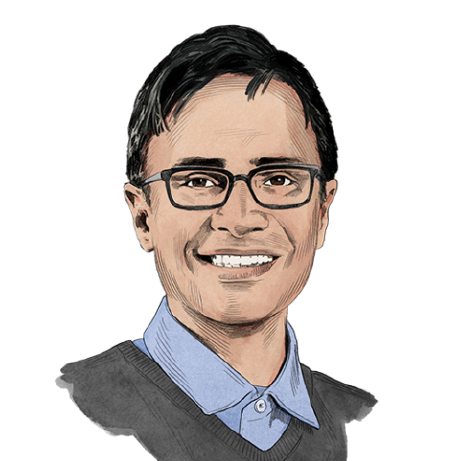
Executive officers and directors listed on Warp Sciences's Form D filed Oct 26, 2026.


Sources
- CompanyWarp Sciences home page · linked above ↑
- CompanyWarp Sciences team page
- CompanyWarp Sciences, Working with Warp
- CompanyWarp Sciences statement of purpose
- CompanyWarp Sciences privacy policy
- InvestorLightspeed, Why We’re Backing Warp, October 22, 2026
- InvestorSignalFire, Why We’re Betting on Warp Sciences, October 22, 2026
- Investor500 Global, Making Discovery Compound, October 22, 2026
- InvestorIVP portfolio profile for Warp Sciences
- PressThe Next Web on Warp's team, lab and funding, October 22, 2026 · linked above ↑
- InvestorPremji Invest, Why We Invested in Warp Sciences, October 21, 2026
- InvestorPremji Invest portfolio profile for Warp Sciences
- SECWarp Sciences Form D, filed 2026-10-26 · linked above ↑
- ProfileGuru Chahal at Lightspeed
- SECWarp Sciences Inc. filing history